
24th December 2024
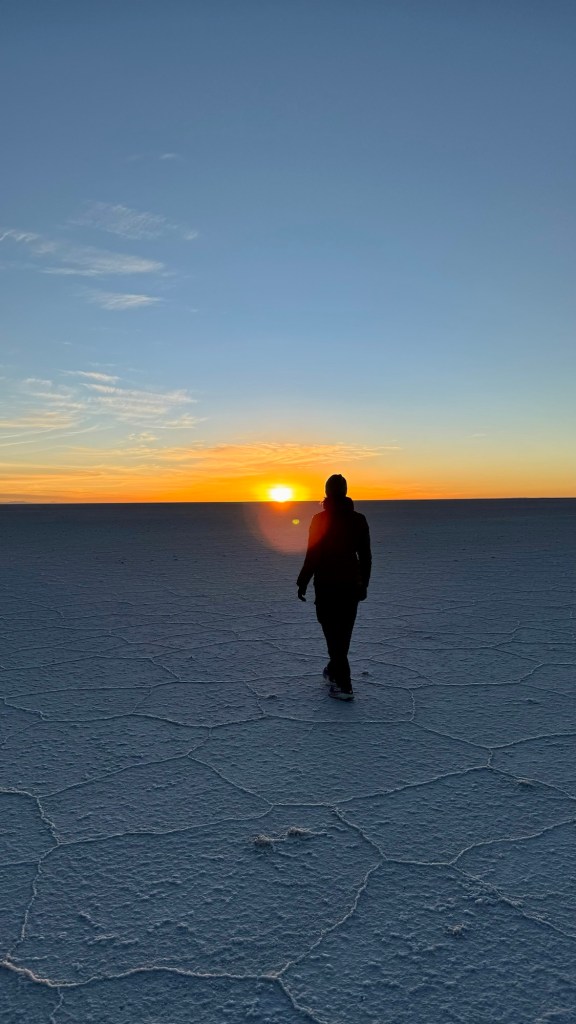
We left the salt hotel at 04:30am to a sky alight with stars. After an hours drive, we stopped to watch the sun rise. At first, a spectrum of pastel pinks, purples, and yellows were projected against the hazy blue sky, but then deepening to an orange glow on the horizon.
We were now standing on the salt flats admiring the suns ascent. A 360° view of blue sky meeting white salt. It looked like a pastel picture that stretched out indefinitely. Salar de Uyuni is the largest salt flat in the world and was once a high altitude prehistoric lake which, over time, evaporated resulting in a hexagonal-shaped salt crusted floor.
We drove on to Isla Incahuasi, an island in the sea of salt which was home to eight hundred year-old giant cactuses, some of which are more than 10m high. The ‘island’ also used to be submerged by the prehistoric lake, evidence for which could be seen in the coral appearance of the rocks. Essentially, we were walking where fish once swam!
We carried on, reaching a point where flags from around the world blew in the wind from a podium made from salt. Two girls on our tour were from Japan and as the Japanese flag was not represented they had come prepared tying their own to the collection.
We then came off the salt flat and onto a salty-muddy track that looked like snow on the road back home once it had been churned up with the mud below. We reached a small town called Colcnani. This town was similar to others we had visited before the salt flats: dirty, dusty and deprived. We spent some time here wandering about a street dedicated to tourism filled with gift stalls. After some window shopping, we enjoyed an ice cream while sitting out of the sun on a table under a tin roof.
We left the town hitting an actual concrete road and suddenly everything felt far too smooth and I strangely missed the rocking motion of the car over the bumpy dirt track. With the road also came the litter. Being in a national park for the last three days meant we had seen no rubbish, but now, hurtling towards Uyuni litter lined the highway.
We stopped at the train cemetery, a place with abandoned trains which used to run from Uyuni to the coast exporting mining minerals until Atacama was won by Chile in the War of the Pacific and with it, the trains were left abandoned with nowhere to go. What’s left are about a hundred rusty carriages and engines which you can climb in and on. While I loved the climbing and exploring aspect of this attraction, the experience was ruined by the sea of tourists fighting for the best photos.
We ate our final meal together as a tour group before driving back to the city. We parted ways and checked into our hostel, exhausted and keen to wash our dirt stained clothes!
 Postcards from Mordor
Leave a comment